
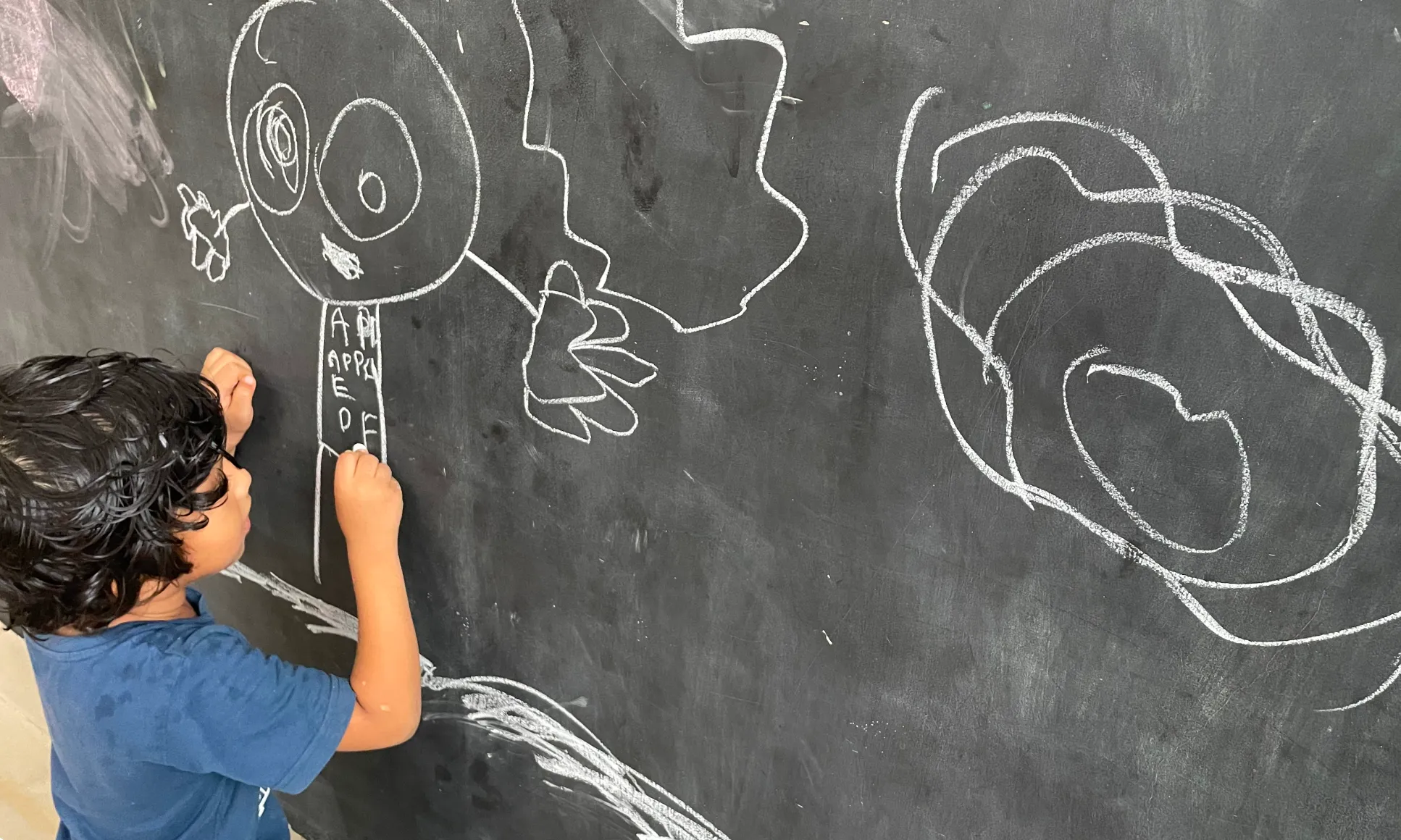
In a self-directed learning model, the child takes the initiative of his/her learning. This provides the learner autonomy over what the child wants to learn, the methods and resources of learning. This model entrusts the learner with full responsibility over the outcome and the timeline of learning. This method also makes the learning journey more fun and exciting, and helps in deeper understanding and retention. This freedom conserves the child’s curiosity and propels them towards a journey of self-actualisation.
Features of self directed learning, as we practice in LC:
1. Goal setting: In this method the learner has full autonomy to explore his/her curiosities or interests. The learner provides a target of what he/she intends to explore over a semester.
2. Learning methods or strategies: This helps the child to make the learning journey really personalised and fine tune to his/her interests and explorations. This ensures the child is self motivated.
3. Resources: Full autonomy is given to the child to use the resources that are available at his/her disposal. It could be with the assistance of a facilitator or using online tools or any assistance that is necessary from outside LC.
4. Self assessment: Assessment is one of the key steps in the journey of learning. This process helps us stay focused on the path. Reflecting on the ways that are adopted to learn and its impact helps reevaluate some of the methods that are used.
5. Feedback: Finally with the help of the facilitator or the expert in the field the child gets help wherever and whenever required. Also it helps like a sounding board to understand and listen about the challenges and triumphs that the child has experienced through this journey.
Conventional schooling is teacher centric: Teachers are given a particular syllabus to complete for each term. The teacher has to complete the required part of the syllabus irrespective of whether the learners have understood or not. There is no opportunity to be creative, and teach different approaches that might be more relevant to the learners.
Learners are mostly daydreaming in classes: Children are expected to sit in classrooms for hours and listen to the teachers, who are in a "lecture" mode. Unless the teacher is very demanding or entertaining, most children are day dreaming. This has been beautiful explained by John Holt in his book Why Children Fail
The syllabus of subjects taught is arbitrary: Learners are taught and forced to appear for exams in topics that have very little relevance to day to day life. Hours of lives of children going to regular schools are wasted in learning, memorizing concepts like formulae in organic chemistry and calculus, when there is very little relevance of these topics in real life.
Learners have serious gaps in their knowledge: Most learners have to "pass" their exams, and education institutes are forced to send a large percent of learners to the next grade, whether they have fully understood the concepts or not. In higher grades, learners are taught advanced concepts, when most of their current concepts are not clear. Exams are designed to ensure that the majority of the children "pass", by having fixed question formats and pre-announced dates.
One size does not fit all: Learners are grouped based on their age and not their interest or ability. Due to the variance in the learning abilities and interest, the class is designed for the "average" pupil. Most learners are either ahead or behind the average and hence disconnected from the system.
Education system creates followers, not thinkers: The goal of the education system is to teach learners how to "stay out of trouble". They can do that by doing arbitrary things like blindly memorizing irrelevant concepts to be able to appear in exams and stay of out of the bad books of their teachers or parents. Such an attitude is carried through life where people end up doing things they don't understand, just because they are told by a person with a higher authority. This is because the hierarchical structure of society needs "workers" who will work as they are told to, without questioning.
The goal of Learners' Collective is to experiment with a new education system that is learner led, where learners play an active role in their education and there is no coercion or force to learn and memorize a particular arbitrary concept.
At Sadhana Learning Centre, our values show up in everyday moments. In how children enter the space without fear, how their voices are heard, how disagreements turn into conversations, and how learning unfolds at each child’s pace. We care deeply about creating an environment where children feel safe to try, fail, question, and grow together. These values guide our choices, shape our relationships, and bring our learning community to life every day.
Fearlessness
Open communication
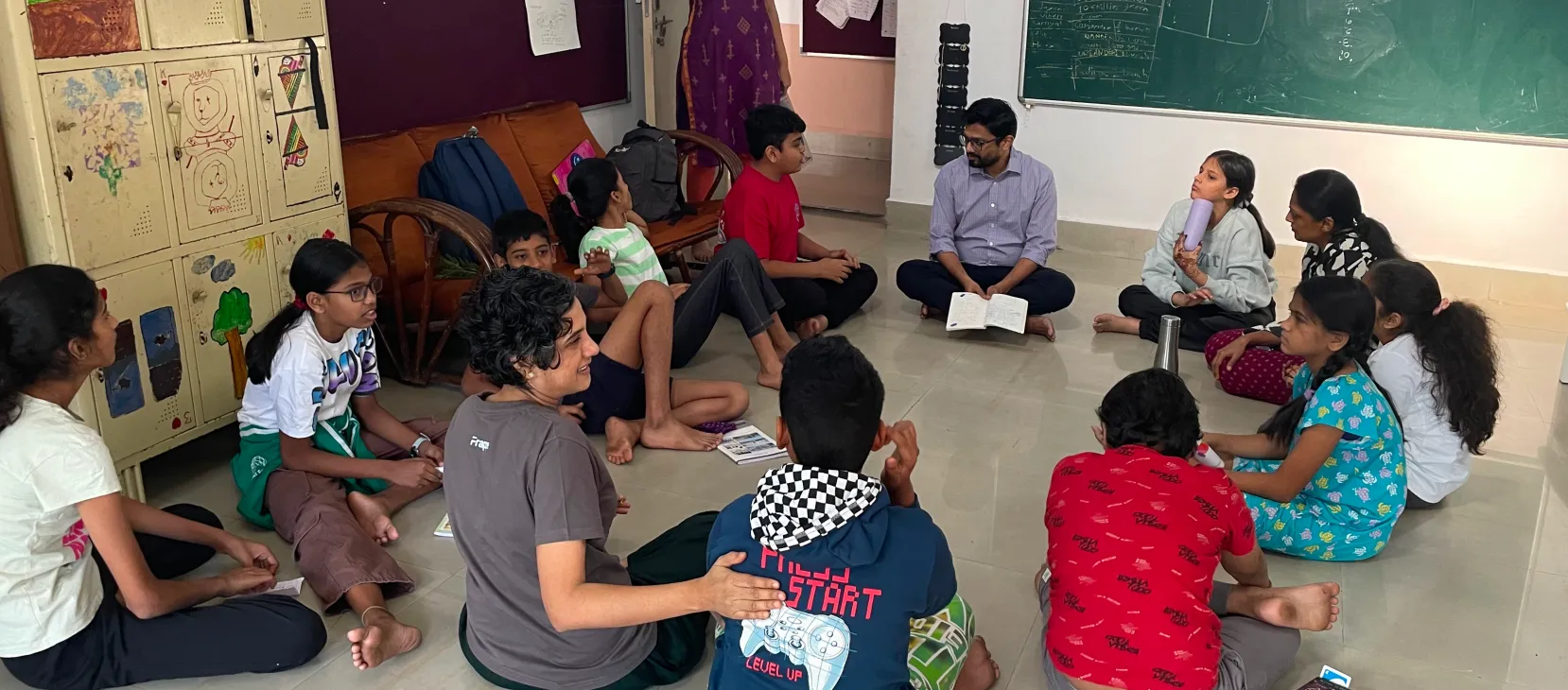
Our environment supports individual opinions and expressions for all stakeholders. We encourage questioning and support everyone to arrive at their understandings through dialogue and discourse. Various forums are set up to encourage exchange of ideas and discuss problems and conflicts.
democratic governance
All the participants of our centre are treated equally despite their age or otherwise. Everyone’s opinion and votes are counted. We have a judiciary committee which takes all the decisions and makes the rules.
excellence
We follow the process of qualitative assessments, there are no exams or tests. At the end of every semester during the review meeting, the child presents his/her self evaluation. This is a unique way to understand one’s own performance, skills acquired through the semester, strengths and weaknesses. Here the yardstick is not a comparative assessment or some kind of external validation but one’s own past performance and the aim is to approach the better version of oneself.
Sadhana Learning Centre